
Japan: Lake Biwa to Takayama Bike Tour
Ten nights; eight days of cycling from Lake Biwa through the historic towns and agricultural valleys of central Honshu to the Sea of Japan. A rest day in Kanazawa is included, with cultural visits at Shirakawa-go and the Hida region, before finishing in Takayama.
"Your guides have always been exceptional with their attention to detail, flexibility and responsiveness." - Christine L.
WHY THIS TRIP?
- Lake Biwa, Japan’s largest lake.
- Mikata Five Lakes and the Sea of Japan coast, with varied riding beside the water and through agricultural countryside.
- Hikone Castle, the former post town of Kumagawa-juku, and the Ichijodani Asakura Clan Ruins.
- Eiheiji, an active Soto Zen monastery.
- Guided walk through Kenroku-en Garden and historic neighbourhoods.
- Historic craft district of Takaoka and woodcarving streets of Inami.
- Shirakawa-go’s traditional thatched houses and Hida Furukawa’s canalside storehouses.
ROUTE EXPECTATIONS:
 Click here to learn about our difficulty rating system.
This cultural cycling tour suits riders comfortable with daily rides of approximately 55 to 85 kilometres. Lakeside and coastal sections alternate with rural roads, rolling countryside and some hillier days. A support van stays nearby during the cycling days, providing opportunities to shorten rides, with scheduled transfers through the longer mountain tunnels. E-bikes can be used on this tour. Riding is predominantly on paved roads and cycle paths, with an optional firm-sand beach section at Chirihama when conditions allow. Group size is limited to eight.

Daily Distance:
- 1: Introductions and Hikone walk.
- 2: Hikone to Imazu, ~74 km (+500 m / -500 m).
- 3: Imazu to Mihama, ~58 km (+575 m / -650 m).
- 4: Mihama to Echizen Coast, ~63 km (+725 m / -725 m); van transfer to Sabae.
- 5: Sabae to Katsuyama, ~74 km (+925 m / -775 m).
- 6: Katsuyama to Yamanaka Onsen, ~56 km (+875 m / -950 m); van transfer to Kanazawa.
- 7: Kanazawa rest day.
- 8: Kanazawa to Himi, ~83 km (+725 m / -725 m).
- 9: Himi to Johana, ~68 km (+575 m / -375 m); van transfer to Shirakawa-go.
- 10: Morning van transfer; Shirakawa-go to Takayama, ~62 km (+675 m / -975 m).
- 11: Independent Departure.

(Click image to enlarge)
Activity Levels

The easiest routes we offer, these are generally flat and cover relatively relaxed distances. You will be comfortable riding a hybrid bike, walking in sneakers, or paddling a light kayak, and will normally have time to take many photos and enjoy extended lunches.

This is primarily an easy route, but some days may fall into the moderate category. You can expect time to stop and smell the roses, but some of the rides may be on more hilly terrain.

Requiring moderate fitness levels, these cover terrain with hills and valleys, and tend to include distances of 50-80km (30-50mi.)/day cycling, or 3-6 hours of walking per day. Most Freewheeling Adventures fall into this category, and are suitable for most ability levels.

This is primarily a moderate route, suitable for most ability levels, but some days may be a little more challenging. You can expect some long distances, and/or some big climbs/descents.

The most challenging trips, these include longer distances, bigger hills, long hikes, exposed paddling, and full days of activity. We recommend a higher degree of fitness and training to make the most of the experience.

There is also a rare double black diamond, reserved for only the most difficult adventures.
Start: Maibara Station, Day 1, at approximately 13:00. Meet your guide for the 15-minute van transfer to Hikone. Maibara is on the Tokaido Shinkansen, with convenient rail connections from Tokyo, Kyoto and Shin-Osaka.
Finish: Spa Hotel Alpina Hida Takayama, Day 11, after breakfast. Guiding concludes after the final dinner on Day 10, with independent departures the following morning. Takayama Station is approximately 200 metres from the hotel.
Meal inclusions: Listed for guided trips only, please see dates & pricing section for accurate inclusions per support level.
Please contact us to arrange alternate meeting and departure plans, if necessary.
DAY 1:
Introductions and Hikone walk.
Meet at Maibara Station for a 15-minute van transfer to Hikone. Spend the afternoon exploring Hikone Castle and neighbouring Genkyu-en Garden, a pond garden and circular walking trail created in 1677 by the local lord.
Meal Inclusions: Dinner.
 Hikone Castle Resort & Spa, Hikone.
DAY 2:
Hikone to Imazu, ~74 km (+500 m / -500 m).
Set out by bicycle from Hikone to Nagahama, stopping before lunch to explore the Otemon shopping area and nearby historic commercial streets. Continue around Lake Biwa’s northern end, then follow its western shore south to Imazu.
Meal Inclusions: Breakfast, Lunch, Dinner.
Imazu Sunbridge Hotel, Imazu.DAY 3:
Imazu to Mihama, ~58 km (+575 m / -650 m).
Today’s route leads toward the Wakasa region and the Sea of Japan, passing through Kumagawa-juku, a former post town on the historic Saba Kaido route between Wakasa and Kyoto. Weave your way through plum-growing countryside and along lakeside roads in the Mikata Five Lakes district before finishing in Mihama.
Meal Inclusions: Breakfast, Lunch, Dinner.
Hotel Wansai, Mihama.DAY 4:
Mihama to Echizen Coast, ~63 km (+725 m / -725 m); van transfer to Sabae.
Cycle from Mihama around Tsuruga Bay, stopping for lunch and a short visit to Kehi Jingu Shrine. Continue north along the Echizen Coast, following the shoreline with views across the Sea of Japan. Finish at Echizen Roadside Station, beside the Crab Museum, and transfer inland to Sabae, your resting place for the night.
Meal Inclusions: Breakfast, Lunch, Dinner.
Hotel Route-Inn, Sabae.DAY 5:
Sabae to Katsuyama, ~74 km (+925 m / -775 m).
Follow Fukui’s agricultural countryside to the Ichijodani Asakura Clan Ruins, the remains of a Sengoku-period castle town that once served as the base of the samurai kin group. Marvel at the historic site before travelling east into Ono, passing near Echizen Ono Castle. Rural roads lead north to Katsuyama, a scenic valley city well known for its dinosaur fossil discoveries and displays.
Meal Inclusions: Breakfast, Lunch, Dinner.
Katsuyama New Hotel, Katsuyama.DAY 6:
Katsuyama to Yamanaka Onsen, ~56 km (+875 m / -950 m); van transfer to Kanazawa.
This morning’s route leads to Daihonzan Eiheiji, an active Soto Zen training monastery founded by Zen Master Dogen in 1244. After exploring the site, cycle north through wooded hills towards Yamanaka Onsen. Transfer to central Kanazawa for a two-night stay.
Meal Inclusions: Breakfast, Lunch, Dinner.
Hotel Amanek Kanazawa, Kanazawa.DAY 7:
Kanazawa rest day.
Join your guide for a morning walk through central Kanazawa, including Kanazawa Castle Park, Kenroku-en Garden, and some of the city’s historic neighbourhoods. The afternoon and evening are free for independent sightseeing, shopping, and dining.
Meal Inclusions: Breakfast.
Same lodging.DAY 8:
Kanazawa to Himi, ~83 km (+725 m / -725 m).
Leave Kanazawa by bicycle, passing the port before joining the coastal cycleway north towards Hakui at the base of the Noto Peninsula. If conditions are suitable, part of the day may include riding on the firm sand of Chirihama Nagisa Driveway, an unusual beach route also used by cars and motorcycles. Turn inland and cross rural hills to reach Toyama Bay before finishing in Himi, a fishing town that will delight you with its fresh seafood.
Meal Inclusions: Breakfast, Lunch, Dinner.
Umiakari, Himi.DAY 9:
Himi to Johana, ~68 km (+575 m / -375 m); van transfer to Shirakawa-go.
Travel south along Toyama Bay before turning inland toward Takaoka, passing through its historic Kanayamachi and Yamacho-suji districts. Follow the riverside paths beside the Sho River and through Inami, a town known for its woodcarving tradition. The landscape shifts to agricultural countryside as you approach the mountain foothills, finishing at Johana Service Area. Transfer through the mountain tunnels to Shirakawa-go, and enjoy a walk among the village’s traditional gassho-zukuri houses as the daytime crowds begin to thin.
Meal Inclusions: Breakfast, Lunch, Dinner.
Onyado Yuinosho, Shirakawa-go.DAY 10:
Morning van transfer; Shirakawa-go to Takayama, ~62 km (+675 m / -975 m).
Begin with a transfer through the mountain tunnels to the start of today’s ride near Kiyomi. Quiet roads snake through the wooded valleys of the Hida region, generally descending towards Hida Furukawa. Stop for lunch in the old town, known for its white-walled storehouses beside the Setogawa canal, before continuing through rural countryside to Takayama. Explore the rich culture of the city, and perhaps take advantage of sake tastings at a local brewery on your own, before gathering for a final dinner.
Meal Inclusions: Breakfast, Lunch, Dinner.
Spa Hotel Alpina Hida Takayama, Takayama.DAY 11:
Independent Departure.
After breakfast, depart independently, or continue your visit in Takayama. Takayama Station is a short walk from your hotel.
Meal Inclusions: Breakfast.
All details and pricing are subject to change without notice.
SELECT A DATE BELOW TO RESERVE:
2027 DATES:
Please contact us with your preferred date
2028 DATES:
Please contact us with your preferred date
TBA
Our tour costs are ALL IN, including fees & taxes.
Tour cost excludes airfare and travel to and from the starting point, costs for activities listed as optional, bar and beverage bills, meals not shown as included, gratuities for your driver and/or guides.
All details and pricing are subject to change without notice.
Please see above for accurate pricing and inclusions, unless we have proposed a customized trip for you and those details are provided in your custom proposal.
1. Choose an advertised date to join a small group, or see our Join a Group page to see where groups are already forming.
2. Pick your own dates. We will confirm quickly and are happy to talk with you as you make your choice. If you would like a private guided departure, this usually involves a surcharge depending on the details. Those who prefer to travel self-guided typically need only two participants to initiate a new date at the advertised price, and we can sometimes offer reduced rates for larger groups. Please get in touch for more information.
BEST TIMES
The best time to enjoy this tour is May to early June and late September to October.
- Spring daytimes in May are generally mild, with typical highs around 20 to 23 °C (68 to 73 °F), depending on location. Mornings and evenings can be cooler in the Hida mountains.
- Summers are hot and humid. June becomes warmer and wetter, while July and August are generally less comfortable for long cycling days.
- Autumn, brings warm days in late September and cooler conditions through October, with typical daytime highs around 18 to 22 °C (64 to 72 °F), depending on location.
GET TO THE START
We recommend arriving in Japan at least one day before the tour begins, allowing time to recover from the flight and reach Maibara for the approximately 13:00 meeting.
Most international visitors arrive through Tokyo or the Osaka/Kyoto region. Japan’s extensive rail network makes Maibara a convenient meeting point for travellers approaching from either direction. Maibara Station is on the Tokaido Shinkansen between Nagoya and Kyoto. Hikari and Kodama services provide connections along the Tokyo, Nagoya, Kyoto and Shin-Osaka corridor; check current schedules when planning your journey, as not every Shinkansen service stops at Maibara.
From Maibara, the tour begins with a short transfer to Hikone. If you are spending time in Japan before the tour, Kyoto is particularly convenient, with frequent rail connections to the Lake Biwa area.
AFTER THE FINISH
Takayama is served by the JR Takayama Main Line. Limited Express Hida trains link Takayama with Nagoya in about 2 hours 20 minutes, where the Tokaido Shinkansen provides onward connections to Kyoto, Shin-Osaka and Tokyo. Rail connections are also available north through Toyama.
Takayama is well worth extra time after the tour, or you can continue by rail or highway bus toward Nagoya, Toyama, Kyoto, Osaka, or Tokyo. Check current schedules before booking onward travel.
BEFORE AND AFTER
Visiting Japan
Comprised of an archipelago of volcanic islands, Japan is a large and geographically varied country. An extensive rail system makes travel between its major cities straightforward, while regional trains and buses connect smaller centres.
The Lake Biwa to Takayama route crosses central Honshu through Shiga, Fukui, Ishikawa, Toyama, and Gifu prefectures. Over ten days the landscape changes from Japan’s largest lake to the Wakasa coast, the Hokuriku region and, finally, the mountain communities of Shirakawa-go and Hida.
Kyoto is a natural place to spend time before the tour, with Maibara easily reached by rail. After the tour, consider an additional night in Takayama or continue to Nagoya, Toyama, or the major cities farther east and west. The route combines well-known cultural centres with smaller towns where daily life, regional food, and local history are a central part of the experience.
MORE READING
Lake Biwa to Takayama Bike Tour begins beside Japan’s largest lake and gradually works north toward the Sea of Japan before turning inland to the Hida mountains. Along the way, the route links castle towns, former trading roads, rural valleys, coastal communities, and two very different historic cities, Kanazawa and Takayama.
Highlights include Hikone Castle and Genkyu-en Garden, Kumagawa-juku on the old Saba Kaido, the Mikata Five Lakes, Kehi Jingu, the Ichijodani Asakura Clan Ruins and Eiheiji. After a rest day in Kanazawa, the journey continues along the coast to Himi and then inland to Shirakawa-go, Hida Furukawa, and Takayama.
Japan is culturally distinct in ways that extend well beyond its landmarks. Rooms, meals, bathing customs, and everyday etiquette may differ from what you are used to at home. Some stays may include Japanese-style rooms, futons, tatami flooring, or communal onsen bathing. Please refer to Freewheeling’s introductory Japan documents before travelling so that these customs feel familiar on arrival.
You May Also Like
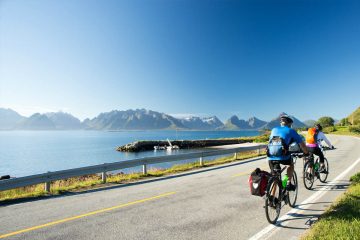
Norway: Lofoten Islands Bike Tour
Eight nights; seven days of cycling on quiet, paved coastal roads with options to hike and sea kayak. In June and July the sun never sets.
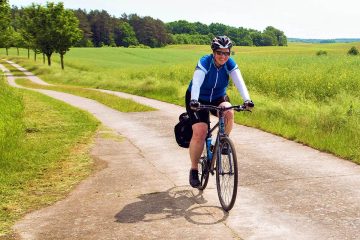
Germany & Denmark: Berlin to Copenhagen Bike
Nine nights; nine days of cycling on an established bikeway connecting Berlin and Copenhagen, plus a warm up lakefront ride on the first day.

Portugal: Porto & Aveiro Bike
Six nights, six days exploring northern-central Portugal, experiencing historic cities, vibrant local flavors, long pristine beaches and charming small towns.