
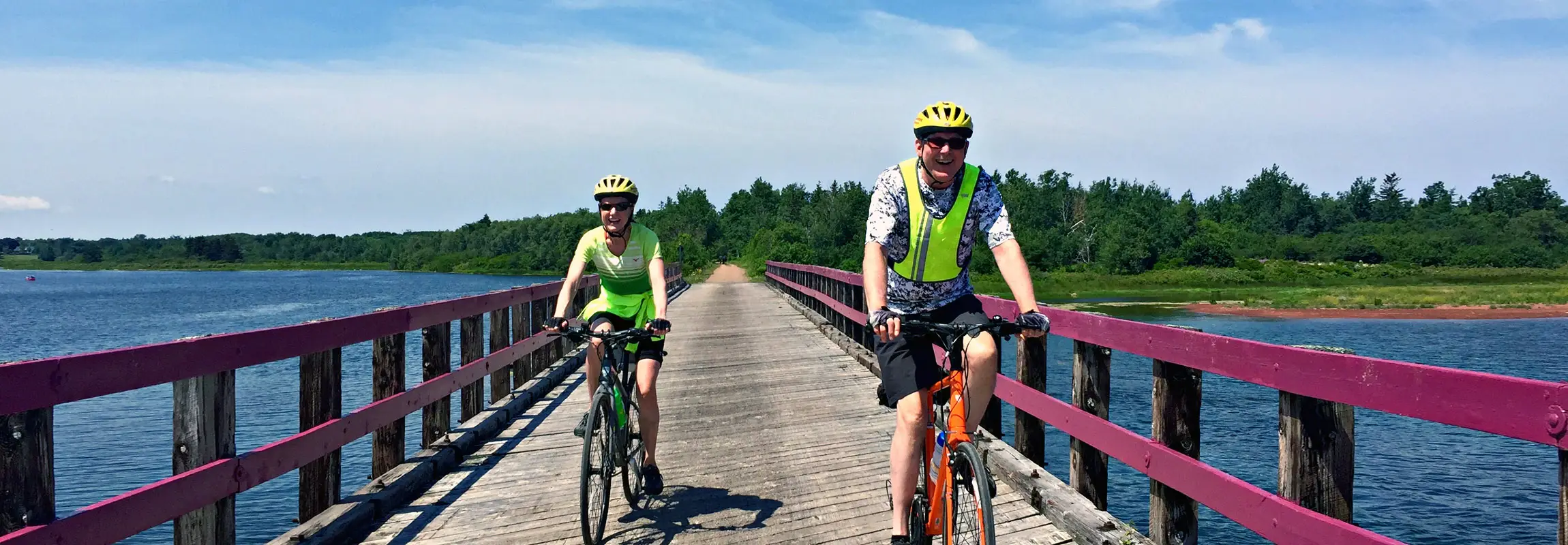
Why Former Railway Trails Make Ideal Bike Routes
There’s a reason so many memorable cycling holidays follow former railway corridors.
Across Canada and around the world, abandoned rail lines have been transformed into scenic, traffic-free cycling routes. Their gentle grades, beautiful landscapes, and relaxed riding make them ideal for bike travel.
1 Gentle Grades Make Riding Easier
Railways were engineered with gradual inclines, creating routes that are naturally comfortable for cyclists. Whether you’re a casual rider, e-bike user, or experienced cyclist, rail trails make multi-day touring more enjoyable.
- Fewer steep climbs
- Predictable daily riding
- Comfortable pacing
- Suitable for a wide range of abilities
2 Traffic-Free Riding Reduces Stress
One of the biggest advantages of rail trails is the absence of vehicle traffic. Without busy roads, cyclists can relax, ride side-by-side, and focus on the experience rather than traffic.
- Scenic views
- Wildlife watching
- Historic bridges and tunnels
- Conversations with fellow travelers
- Visits to small communities
“The routes were wonderfully relaxed and scenic — we could truly enjoy the ride instead of worrying about traffic.” — Susan M., Ontario
3 Rail Trails Pass Through Beautiful Landscapes
Former railway corridors often follow river valleys, coastlines, forests, vineyards, and rural countryside. Separated from highways, these routes often feel peaceful and immersive.
- Coastal scenery
- Wine regions and farmland
- Forests and wilderness areas
- Historic trestles and tunnels
- Lakeside and riverside routes
“Among the very best cycling experiences we’ve had anywhere.” — Kathleen S. & Manfred K.
4 Rail Trails Make Bike Travel More Accessible
Not every cyclist wants a demanding athletic challenge. Rail trails allow travelers to explore actively while riding at a comfortable pace. For many people, a rail-trail holiday is their introduction to multi-day bike touring.
- Confidence for newer cyclists
- Comfortable daily distances
- Relaxed exploration
- Enjoyment over exertion
5 Canada Has Some Outstanding Rail-Trail Routes
These routes showcase exactly why former railway trails have become some of Canada’s most popular cycling destinations.

Confederation Trail, Prince Edward Island
Cycle Prince Edward Island’s Confederation Trail, a scenic rail trail spanning the island with coastal views, charming villages, and gentle riding.

Kettle Valley Railway Trail, British Columbia
Ride British Columbia’s Kettle Valley Railway Trail, a spectacular rail trail featuring historic trestles, tunnels, vineyard regions, and mountain scenery.

Rum Runners Trail, Nova Scotia
Explore the Rum Runners Trail by bike, following a former railway through forests, lakes, coastal villages, and beautiful Atlantic scenery.

Le P’tit Train du Nord, Quebec
Discover Quebec’s Laurentians on Le P’tit Train du Nord, a traffic-free cycling route with beautiful scenery, welcoming villages, and easy grades.
Potential future “bucket-list” rail trails
While the biggest rail-trail boom happened in the 1990s–2010s, there are still several notable former railway corridors being converted into cycling and walking routes right now. One in particular we are most excited about is the Shuswap North Okanagan Rail Trail (British Columbia, Canada). The route follows a former rail corridor between Sicamous and Armstrong through lake country and mountain scenery. It has the potential to become one of North America’s premier rail-trail cycling destinations, combining lake views, tunnels, historic rail infrastructure, and connections to existing cycling routes such as the Okanagan Rail Trail.
Conclusion
Former railway trails offer a unique combination of comfort, scenery, and accessibility that makes them some of the best cycling routes in the world. Their gentle grades, traffic-free riding, and connection to beautiful landscapes allow cyclists to focus on the journey rather than the challenge. Whether you’re planning your first multi-day bike tour or looking for your next cycling adventure, rail trails provide an enjoyable way to explore regions at a relaxed pace. And with exciting new projects like British Columbia’s Shuswap North Okanagan Rail Trail on the horizon, the future of rail-trail cycling looks brighter than ever.